
LGND Wants to Build the ChatGPT for the Earth
The Earth generates an overwhelming amount of environmental data every day—around 100 terabytes of satellite imagery alone. But turning this raw data into something useful, especially for real-time decision-making, is an enormous challenge. That’s exactly what LGND, a new AI startup, is setting out to solve. In short, LGND wants to build ChatGPT for the Earth—an AI tool that can understand, analyze, and deliver insights from geographic data instantly. Whether it’s helping California assess wildfire risks or aiding climate scientists in analyzing land use, the startup aims to make Earth’s complex data more accessible and actionable. By using AI-powered geographic embeddings, LGND hopes to revolutionize how we interact with planetary-scale information.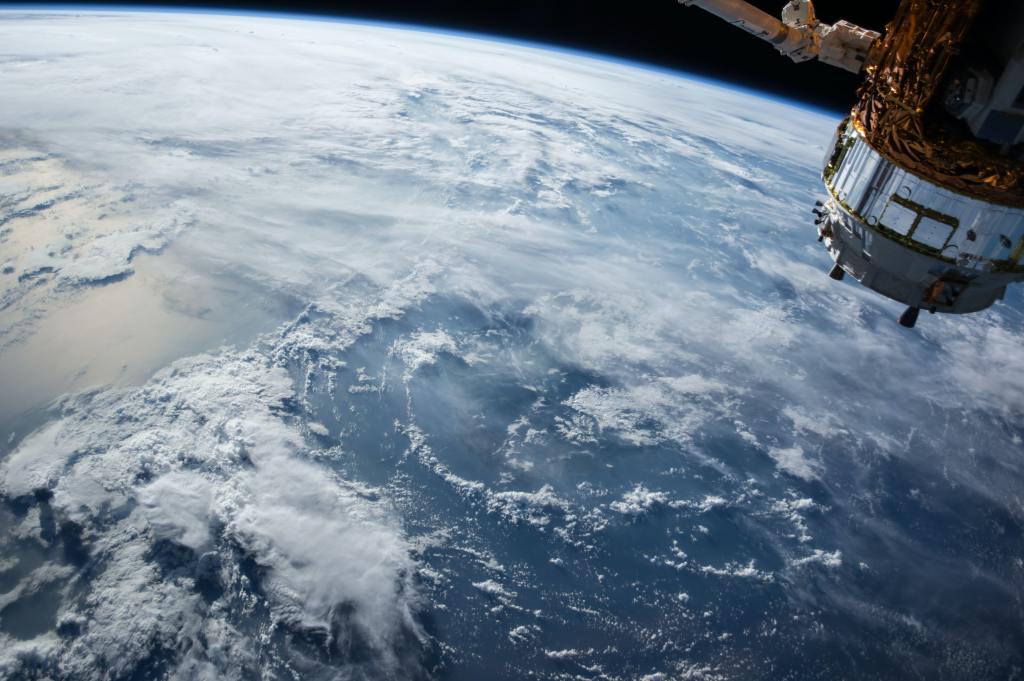
Image Credits:NASA
Why LGND Thinks the Earth Needs a ChatGPT-Like Interface
Despite how much environmental data we collect—from satellites, sensors, and on-the-ground surveys—interpreting it remains deeply technical, expensive, and slow. According to LGND co-founder and CEO Nathaniel Manning, even answering what seems like a straightforward question—like how many fire breaks exist in California and how they’ve changed over time—requires hiring experts, training neural networks, and burning through hundreds of thousands of dollars. Traditionally, this work involved having people manually interpret satellite images, a process that simply doesn't scale. LGND’s platform uses AI to automate this kind of analysis at scale, transforming imagery and geospatial data into easy-to-query vector embeddings. These embeddings allow the system to “understand” spatial information in a way that resembles how ChatGPT understands text, creating the potential for a natural language interface for the planet.
Inside LGND’s $9M Vision to Automate Earth Intelligence
To scale this ambitious vision, LGND recently raised a $9 million seed round led by Javelin Venture Partners, with participation from firms like AENU, Clocktower Ventures, Coalition Operators, MCJ, and Space Capital. Angel investors from companies like Salesforce, Ramp, and Keyhole also joined. These funds will support the development of LGND’s AI platform, which turns satellite imagery and geographic datasets into “vector embeddings”—compact digital representations that can be queried and compared, much like how modern AI models process human language or photos. Co-founder and chief scientist Bruno Sánchez-Andrade Nuño emphasized that LGND is not about replacing experts but augmenting them—making their work 10x to 100x more efficient. With climate change accelerating and global disaster response needing better tools, the company sees its technology as essential for informed planetary decision-making.
How LGND’s ChatGPT for Earth Could Reshape Climate, Infrastructure, and Policy
The real promise of LGND’s ChatGPT-like interface is its versatility. While current tools often require deep domain knowledge and compute power to interpret geographic data, LGND’s embeddings could simplify this dramatically. Emergency responders could use natural language to assess flood risks in a specific region. Policymakers might explore infrastructure vulnerabilities across counties. And climate scientists could query long-term land use changes across continents. By making geospatial data as intuitive to explore as a chat conversation, LGND is lowering the barrier to entry for governments, researchers, and private companies alike. Just as ChatGPT democratized AI for language, LGND is doing the same for the planet—bridging the gap between raw environmental data and real-world action.
Post a Comment