

The Privacy Debate Around Camera-Equipped AirPods
Camera-equipped AI wearables have developed a reputation problem. Devices like Meta’s Ray-Bans raise concerns about people being recorded without consent. So the idea that Apple is reportedly preparing to release camera-equipped AirPods seems to conflict with the iPhone maker’s privacy-focused brand identity.
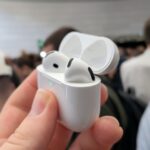
However, Apple’s now-leaked camera-equipped AirPods may not be as concerning as they initially sound. The company appears to have designed these devices with privacy safeguards that distinguish them from other AI wearables.
What the Leak Reveals About Camera-Equipped AirPods
The rumored cameras were reportedly confirmed via video footage found in Apple’s macOS 26.7 RC (release candidate). The footage shows a man holding up a book while wearing camera-equipped AirPods and apparently having a conversation with Siri about it.
The audio track accompanying the video states: “With Visual Intelligence, your world becomes savable. See something you like? Just ask me to save it for later.”
The addition of cameras to the popular wireless earbuds is further confirmed through code referencing a “Hair Detected” error. This warning would alert users when their hair is covering the AirPods’ camera. The launch of camera-equipped AirPods could easily backfire on Apple if not executed properly.
Why Apple’s Approach to Camera-Equipped AirPods Differs
For a company built on trust, this represents a bigger gamble than a typical hardware refresh. AirPods currently blend in as a simple iPhone accessory that people wear all day without a second thought. A change like camera-equipped AirPods could instead make them more conspicuous, leading people to wonder whether the person opposite them is secretly recording.
Apple appears to have thought this through with its camera-equipped AirPods. According to an earlier report from Bloomberg’s Mark Gurman, the camera-equipped AirPods won’t be able to record media. As Gurman explained:
“The cameras essentially act as eyes for the Siri digital assistant and aren’t designed to take photos or video. These components — located in both the right and left earbuds — allow the device to capture visual information in low resolution.”
Visual Intelligence Over Surveillance With Camera-Equipped AirPods
The goal of camera-equipped AirPods isn’t to turn one of Apple’s best-selling accessories into a surveillance device. Instead, it’s to provide a way for AirPods owners to engage with the newly upgraded Siri AI, set to ship in September with Apple’s iOS 27 and other software updates.
This means someone wearing camera-equipped AirPods could look at something — like a book, as shown in the leaked video, or perhaps ingredients they’re preparing to cook — and simply ask Siri for help. Camera-equipped AirPods could also be useful for turn-by-turn walking directions when navigating an unfamiliar city.
The LED Indicator on Camera-Equipped AirPods
There is one notable wrinkle in Apple’s privacy strategy for camera-equipped AirPods. Gurman also reported that the new camera-equipped AirPods would include an LED indicator that lights up whenever the device is sharing visual data to the cloud. He questioned the light’s visibility given the AirPods’ small size.
While the LED is the right approach from a transparency and privacy perspective for camera-equipped AirPods, it risks visually lumping them in with other AI wearables already facing public skepticism. These include Meta Ray-Bans, Snap’s Spectacles, and Google’s new AI glasses. Apple can control what the cameras on its camera-equipped AirPods do, but it’ll have far less control over what people assume they do.
The Strategic Bet on a Screen-Free Future With Camera-Equipped AirPods
For Apple, the bigger strategic bet is that camera-equipped AirPods could push consumers toward a screen-free future — or at least one where there’s less need to pull out an iPhone throughout the day. By baking AI access into a commonly worn and already socially acceptable wearable, Apple’s customers could interact with the world around them in a more natural way than staring down at a glowing screen.
Potential Use Cases for Camera-Equipped AirPods
Reading assistance: Ask Siri about books, signs, or documents you’re viewing with your camera-equipped AirPods
Cooking help: Get recipe guidance by looking at ingredients while wearing camera-equipped AirPods
Navigation: Receive walking directions without looking at a phone, thanks to camera-equipped AirPods
Shopping: Save items you see for later reference using your camera-equipped AirPods
Balancing Innovation With Consumer Trust in Camera-Equipped AirPods
Camera-equipped AirPods represent a careful balancing act between innovation and privacy protection. Apple’s decision to restrict camera functionality to low-resolution visual intelligence rather than media recording addresses the primary concern that critics might raise about camera-equipped AirPods.
However, the company still faces the challenge of public perception. Once people see cameras on camera-equipped AirPods, their immediate assumption may be surveillance, regardless of the technical limitations Apple has implemented.
The LED indicator on camera-equipped AirPods could help build trust, but only if users notice and understand it. Given the small size of camera-equipped AirPods, visibility remains an open question that could make or break consumer acceptance.
What Camera-Equipped AirPods Mean for Wearable Technology
Apple’s approach to camera-equipped AirPods could set a precedent for how AI wearables handle privacy concerns. By prioritizing visual intelligence over recording capabilities, Apple is positioning itself as a responsible innovator with camera-equipped AirPods in a space where trust is paramount.
The success of camera-equipped AirPods will depend on how effectively Apple communicates the privacy safeguards to consumers. If users understand that the cameras on camera-equipped AirPods serve Siri rather than surveillance, the “pervert pods” fear may prove unfounded.
Apple’s camera-equipped AirPods may not be the privacy nightmare some initially feared. With no media recording capability, a visible LED indicator, and a clear focus on Visual Intelligence rather than surveillance, Apple appears to have addressed the most significant concerns with camera-equipped AirPods.
The real challenge ahead is public perception. Apple can design privacy into its camera-equipped AirPods, but it must also build understanding among consumers. If successful, camera-equipped AirPods could help normalize AI wearables while maintaining the trust that Apple has built over decades.
Whether this gamble with camera-equipped AirPods pays off remains to be seen, but the approach demonstrates that innovation and privacy don’t have to be mutually exclusive.